
October 5, 2026
Looking back to move forward

Looking back to move forward
Inside an 18-month partnership supporting Bank of Sydney through a major transformation
You don't need us to tell you that organisational change almost never happens neatly, let alone in one fell swoop.
There might be a big launch date, project plan, or a system migration that marks a milestone, but for the people living through it, change tends to be more gradual and a lot more... challenging (to put it lightly). Roles shift, new processes need to be learned while the day job continues, uncertainty looms far longer than we'd like it to. All the while, leaders are expected to support their teams while navigating much of the same change themselves.
For Bank of Sydney, the past couple of years have involved significant technological and organisational transformation. Most notably, the Bank has transitioned to a new core banking platform, alongside launching new Internet Banking and Mobile Banking experiences in March 2026. The investment is designed to simplify systems and operations, enable faster payments and real-time processing, improve digital servicing, and reduce manual processes. Bank of Sydney has described the core banking transition as one of the most significant milestones in its history.
Behind a transformation of that scale, of course, are people.
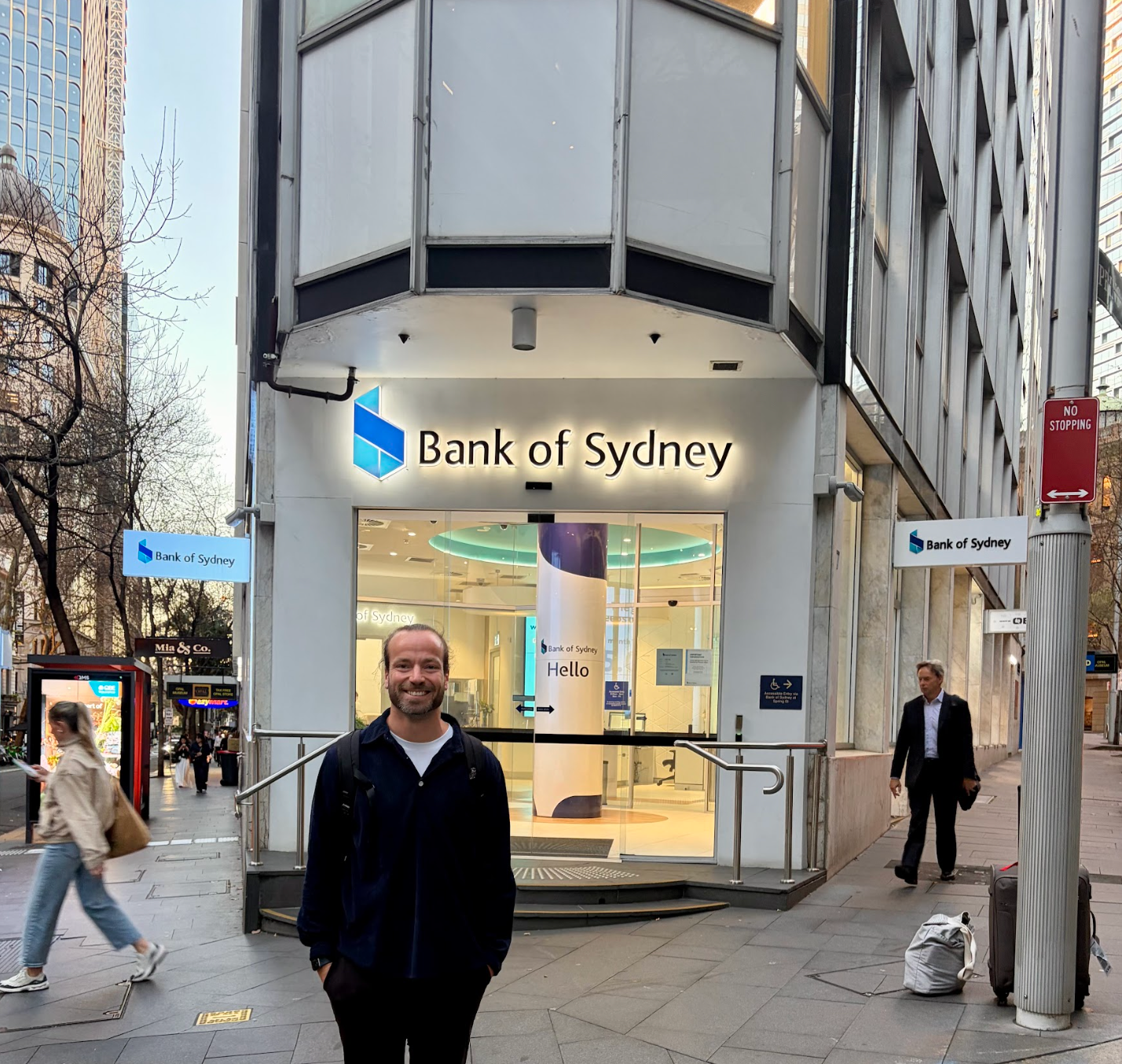
For the past 18 months, Lead-Well has been working alongside Bank of Sydney leaders and teams as they’ve navigated the human element of that change.
What began as a series of Change Resilience Sessions in early 2025 has gradually evolved alongside the organisation itself, moving into a Navigating Change Programme and, most recently, a broader Change Leadership Programme across Sydney and Melbourne.
It’s been a useful reminder that supporting people through change is rarely about one intervention. It’s about listening to what is happening now, responding to what people actually need and continuing to adapt as the organisation moves forward.
Start by listening
As always, before the latest phase of the program was designed, we spent time listening.
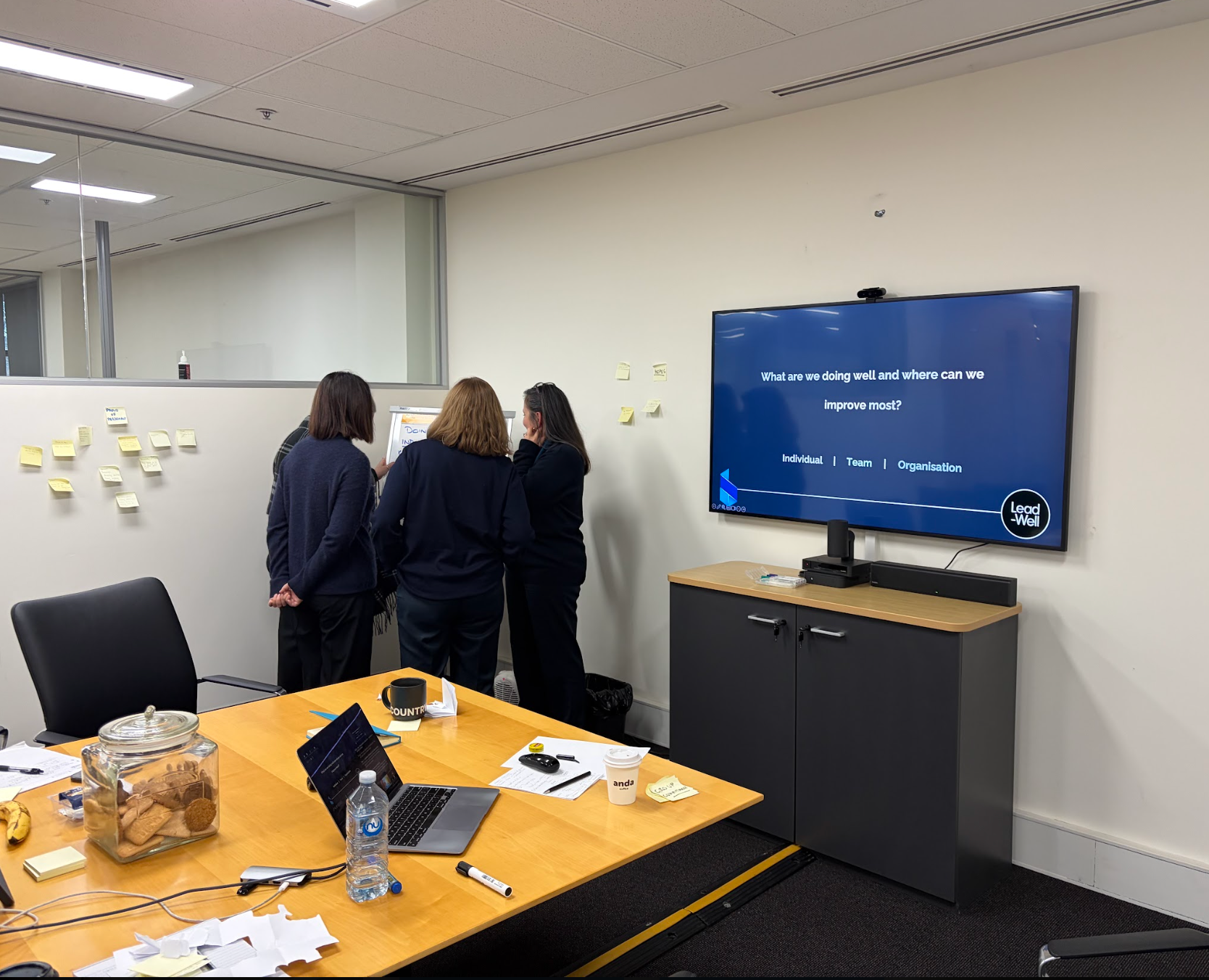
Individual and group sensing sessions with leaders helped surface what was happening beneath the organisational change, while conversations with external stakeholders added another perspective. We then used those insights to shape the program itself.
This was a crucial step because by July 2026, people had already been navigating a lot.
The technology transition wasn’t an abstract organisational change. Participants spoke about learning new systems while managing existing responsibilities, taking on additional roles, absorbing increased pressure and complaints, and keeping business-as-usual running throughout.
Looking back before looking forward
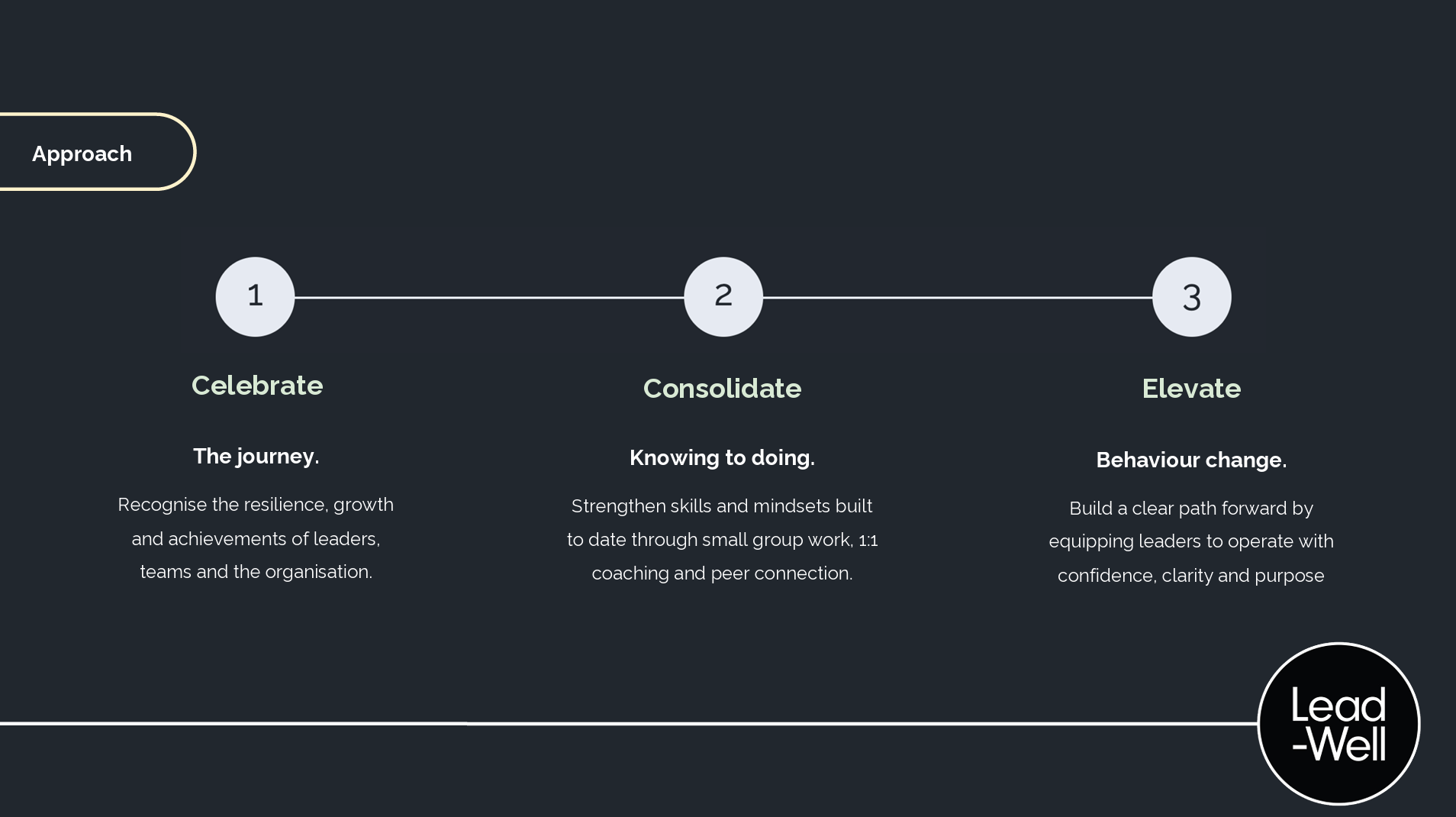
That became an important part of our approach to this latest phase: Celebrate. Consolidate. Elevate.
Celebrate what people have already navigated. Consolidate the skills, mindsets, and learning developed along the way. Then elevate that into the confidence and capability needed for whatever comes next.
It meant intentionally creating room to ask questions organisations can easily skip when attention is fixed on the next milestone:
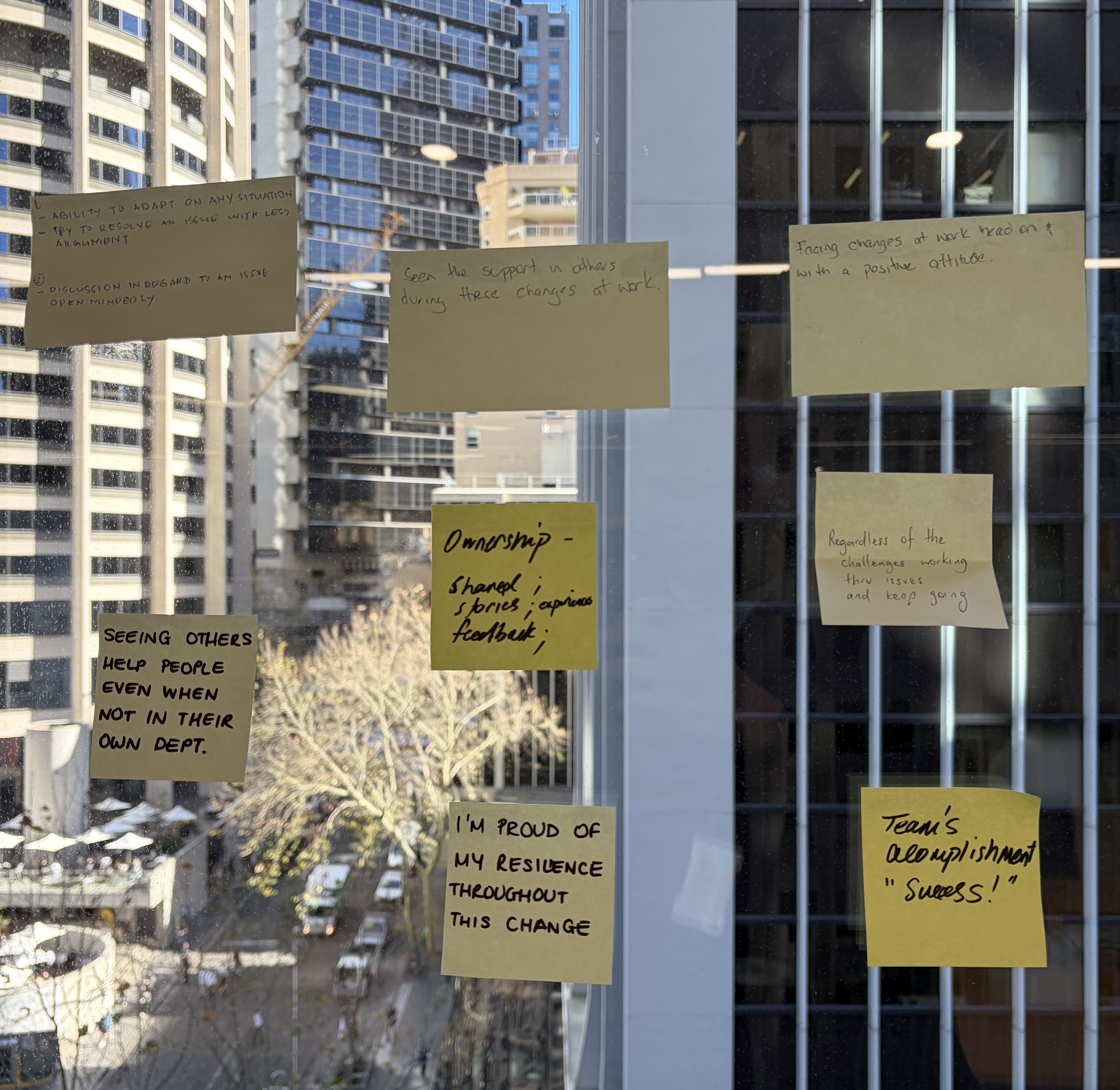
What have we done well? What have we learned? What are we proud of? And what do we need from each other moving forward?
For Cheryl San Andres, Head of Digital and Technology Portfolio Management at Bank of Sydney, that opportunity to pause became an important part of the work:
“Taking the time to pause during a busy day or week and participate in these sessions is valuable in itself. Greater than that, the insights and understanding of where we are in our transformation journey helped us appreciate our progress and remind us that we are not alone in navigating change.”
What people valued
Of course, "creating space to reflect" is only useful if people actually take something away from it.
Across 32 participant responses from the Sydney and Melbourne sessions, the program received an average satisfaction rating of 4.6/5, a Net Promoter Score of 69, and 100% of respondents said their expectations were met or exceeded. Some 97% were satisfied or very satisfied with the facilitators (a shout out to Pete and Ian).
But the comments behind those numbers tell us more.
Three themes repeatedly emerged: practical tools people could apply to their work, connection through shared experience, and the value of having an environment to speak openly and feel heard.
As one participant put it:
“The training provided a good balance of theory and practical application. I particularly appreciated the opportunities to reflect on my own leadership behaviours and learn from the experiences shared by others.”
Charlie Chambouras, Head of Operational Assurance at Bank of Sydney, saw a similar impact:
“Through Lead-Well, Peter has provided practical actionable strategies that have helped improve resilience, strengthen leadership capability, and encourage meaningful workplace conversations.”
That's an important combination, because people need useful strategies for navigating the discomfort and challenges that come with uncertainty, but they also need opportunities to realise they aren’t navigating it alone.
Listening also means hearing what still needs work
We believe that a meaningful measure of a program isn’t whether everybody leaves saying everything is wonderful. The sessions also created space for honest conversations about what could be better.
Across Sydney and Melbourne, people wanted clearer and more honest communication, more genuine recognition, greater leadership visibility, and continued investment in connection and development. At the same time, teamwork and cross-functional support consistently emerged as strengths that had helped people through the change.
Those insights aren’t an inconvenient footnote to the positive feedback; they're actually part of the point. Listening to people during wide-scale transformation means being prepared to hear both.
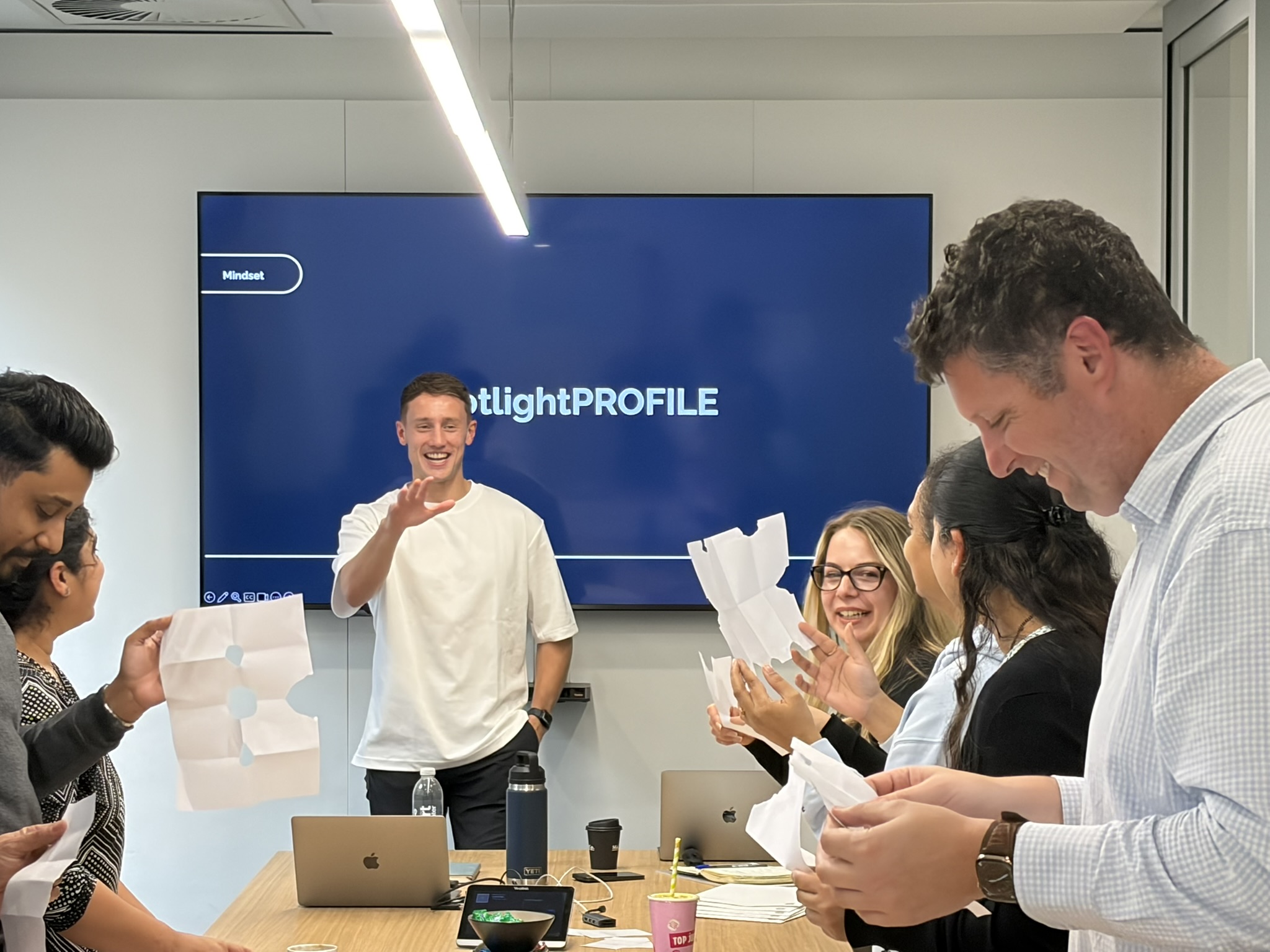
Progress belongs to the whole organisation
There are encouraging signs in Bank of Sydney’s broader engagement data, too.
Bank-wide engagement has moved in a positive direction over the period surrounding our partnership. The June 2026 Pulse Check recorded overall favourable engagement at 73%, while unfavourable engagement decreased from 8% in November 2025 to 6% in June 2026.
That’s encouraging context, rather than something we’d claim solely as a Lead-Well outcome.
Engagement is shaped by countless interactions, decisions, leaders, and parts of an organisation, including many areas our work doesn’t touch. The Bank’s own results also show variation across teams and measures, which is an important part of the picture, too.
Lead-Well began working with Bank of Sydney in early 2025, so our partnership has happened alongside some of that movement.
We wouldn’t claim the improvement as ours, but what we can be proud of is having played a small part in a much bigger journey.
Change is organisational, experiencing it is personal
This is one of the biggest things that this partnership continues to reinforce. Transformation plans happen at an organisational level, but change is experienced one person at a time.
Supporting the human-side of transformation well means giving people practical tools and building leadership capability. But it can also mean creating space to pause, acknowledge what has been difficult, recognise what’s working, and have conversations that might otherwise never happen.
Or, as Cheryl described the experience:
“Lead-Well sessions are always calming, reflective, and restorative. Peter has a unique ability to bring a sense of calm amidst the challenges and complexities of our organisation.”
The work with Bank of Sydney continues, as does their transformation journey.
Our work together has been a powerful reminder that one of the most useful things we can do before asking “what’s next?” is to recognise just how far people have already come.

This month's Think-Well article was written by Ashlyn, Lead-Well’s Communications Advisor & Copywriter.
Share Post
Reach out
Let’s figure out what true support looks like for you and your team.
Contact us through the form below or at hello@leadwellcc.com