
June 18, 2026
The importance of pause in a "thank you, next" culture.

The importance of pause in a "thank you, next" culture.
We are evidently remarkably good at moving onto the next thing. And then the next thing. And then the next. A milestone is reached, a campaign greenlit, a challenge overcome, project completed… and attention swiftly shifts to the next priority.
We’ve become so good at this, in fact, that we've become remarkably poor at doing the thing that might sustain us much more robustly and satisfyingly: pausing.
For many leaders and teams, there is always another deadline, another meeting, another problem to solve. The pressure to keep moving can make pausing feel indulgent, even unproductive.
Yet when we talk about a pause, we're not talking about stopping work altogether. We're talking about creating enough space to notice the small things that often get overlooked: progress that has been made, effort that has been invested, people who have contributed, little wins and triumphs along the way, and things that are actually going well (before our attention skips to whatever isn't).
Part of this is simply human nature. We are biologically wired to notice threats, risks and problems to ensure survival – our brains are incredibly efficient at identifying what could go wrong. Which is helpful when realising that the office fire alarm is actually not just a safety drill and we can definitely smell smoke; not so much when the team has spent six months working towards something really significant and all anyone can talk about is the one thing they'd do differently next time.
This tendency shows up in workplaces every day. Under pressure, conversations naturally gravitate towards gaps, risks, all the little fires that need putting out, and performance issues. Before long, moments of recognition, appreciation, and connection quietly get squeezed out by competing priorities.
Ironically, these are often the very things that help people sustain pressure in the first place.
When pressure rises, recognition tends to fall
We said this on LinkedIn a few weeks back, but here it is again for good measure:
WorkHuman's 2024-2025 research found that employees who feel undervalued are five times more likely to be disengaged and twice as likely to quit, while employees who receive recognition that is authentic, timely, and equitable are four times more likely to be engaged at work.
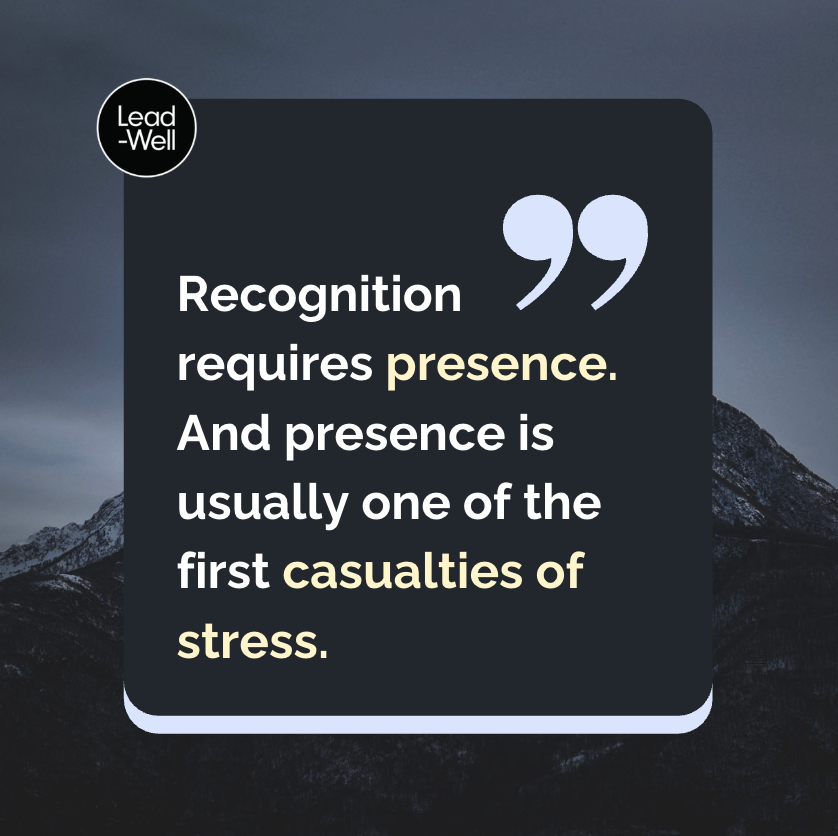
Recognition requires us to really BE there, to be present enough to notice people in a genuine way – and presence is one of the first things to go when we’re preoccupied with 150 browser tabs open, both on our screens and in our brains.
It’s a hard task to sincerely acknowledge someone’s unique contribution when we're rushing constantly. It’s difficult to celebrate progress when we're already focused on the next target. And it’s nearly impossible to make people feel seen and valued when our attention is permanently elsewhere.
The irony is that many of these behaviours are often referred to as "the little things", or the nice-to-have’s…
- A genuine thank you for something that would otherwise have gone unnoticed
- Acknowledging someone’s effort and unique contribution behind a piece of work, not just the outcome
- Prioritising moments of pause to celebrate progress and momentum before immediately moving the goalposts
- Remembering that a colleague's child was sick last week, and asking how they're doing
- Recognising people for the energy and qualities they bring to the environment of your workplace, not just the bottom line
- Checking in after a tough conversation rather than assuming it's resolved
All very small investments of time in the scheme of things, yet they are far from small in their impact. And they are essential to have for the cultural health, emotional resilience, and sustainable long-term performance of any organisation.
Recognition may take only a few seconds of true presence and attention, but its influence extends far beyond morale – shaping retention, collaboration, performance, reputation, and culture.
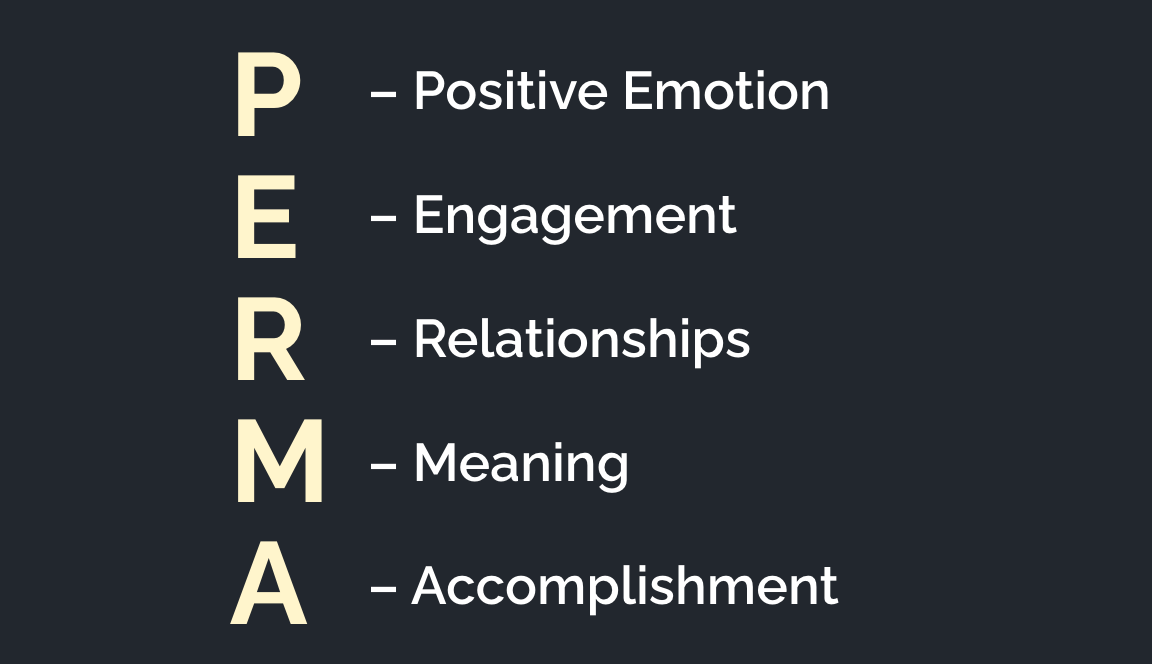
The broader science points in a similar direction. Psychologist Martin Seligman's PERMA Model identifies positive emotion, engagement, relationships, meaning and accomplishment as key ingredients of human flourishing.
Research by Barbara Fredrickson, particularly her work on positive emotions and micro-moments of connection, suggests that even brief, genuine interactions help build the psychological and social resources people draw upon when challenges arise.
Again and again, the evidence points to the same conclusion: the things that appear small are often doing some of the heaviest lifting.
This matters deeply because culture is rarely built through a handful of major milestones. Far more often, it is moulded through hundreds of daily micro-moments and interactions: how people are greeted, how effort is acknowledged, how individual contributions are recognised, how setbacks are handled, how curiosity is shown, and how people feel after spending time with in our environments.
The highest-performing teams we encounter are rarely the ones that simply experience less pressure or challenge overall. They are teams that have learned how to balance ambition with appreciation, celebrate progress and effort as well as outcomes, acknowledge investment of care and dedication as well as achievement, and create moments people can genuinely look forward to and get energised about.
Practicing a pause and prioritising presence can help us protect all these small things (which are actually the big things).
Share Post
Reach out
Let’s figure out what true support looks like for you and your team.
Contact us through the form below or at hello@leadwellcc.com